Engineering Knowledge Base

21 articles covering geology, geophysics, drilling, petroleum engineering, and more.

Filter by Category:
Feb 13, 2026
5 min read

THE REPETITION THEORY

Crystallography is fundamentally based on periodic atomic repetition governed by symmetry elements—translation, rotation, reflection, inversion, and their combinations—which determine crystal structures and their 1D, 2D, and 3D patterns.

By Yuri Kemal FatahRead
Feb 8, 2026
4 min read

CRYSTALLOGRAPHIC SYMMETRY ELEMENTS

Crystallographic symmetry elements—zones and zone axes, center of symmetry (i), mirror planes (m), and rotation axes (n)—describe the geometric regularity of crystals and are fundamental for classifying crystal systems.

By Yuri Kemal FatahRead
Feb 8, 2026
3 min read

CRYSTALLOGRAPHIC PROJECTION

Crystallographic projection converts a crystal’s 3D form into 2D representations—through spherical, gnomonic, orthographic, and especially stereographic projections—to analyze crystal face orientation and symmetry.

By Yuri Kemal FatahRead
Feb 8, 2026
4 min read

CRYSTAL 3: Weiss Coefficients and Miller Indices

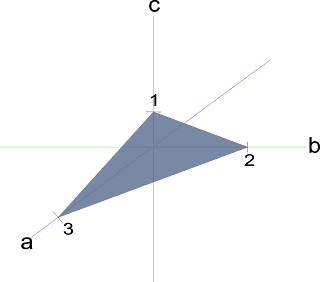
Weiss coefficients describe crystal planes by their axis intercept ratios, while Miller indices use their reciprocals (hkl) to give rational, integer-based plane designations without infinite values.

By Yuri Kemal FatahRead
Feb 8, 2026
4 min read

CRYSTAL 2: Crystals and Crystal Systems

Crystals are orderly solids formed by magma cooling and are classified into seven systems based on axis lengths and angles.

By Yuri Kemal FatahRead
Feb 8, 2026
6 min read

CRYSTAL 1: Interfacial Angles as the Identity of Crystals

Nicolaus Steno’s Law states that a mineral always has constant interfacial angles, measurable with goniometers or X-ray diffraction.

By Yuri Kemal FatahRead
Feb 8, 2026
3 min read

CRYSTALLOGRAPHY AND MINERALOGY

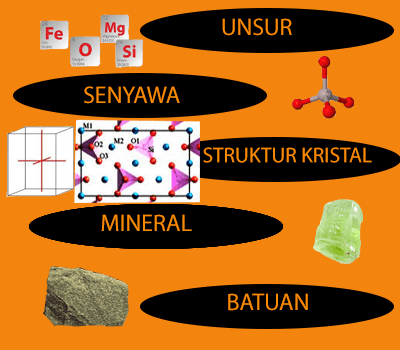
Crystallography studies crystal structures while mineralogy studies minerals, and together they explain how elements bond into crystal systems that form minerals—the fundamental building blocks of rocks and the basis for understanding geological processes.

By Yuri Kemal FatahRead
Feb 8, 2026
3 min read

EVOLUTION

Evolution is the gradual change in inherited traits within populations over time—shaped by genetics, natural selection, and environmental pressures—studied through taxonomy and evidenced in fossils by morphological changes that lead to adaptation, speciation, and extinction.

By Yuri Kemal FatahRead
Feb 8, 2026
8 min read

FOSSIL 10: VERTEBRATE

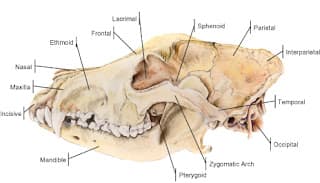
Vertebrates are backbone-bearing animals with internal skeletons that evolved from early marine jawless forms into diverse groups—including fish, amphibians, reptiles, birds, and mammals—identified in the fossil record mainly through bone and tooth morphology.

By Yuri Kemal FatahRead
Feb 8, 2026
9 min read

FOSSIL 9: ICHNOFOSSIL

Ichnofossils are trace fossils formed by animal activity (e.g., burrows, tracks, borings, coprolites) and are classified by behavior, preservation, depositional setting (ichnofacies), and burrow taxonomy—such as subhorizontal, unbranched, cylindrical, passively filled, lined burrows identified as Palaeophycus.

By Yuri Kemal FatahRead
Feb 8, 2026
6 min read

FOSSIL 8: ARTHROPODA

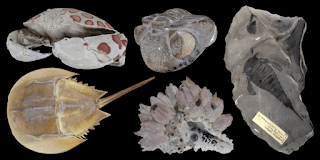
Arthropoda are bilaterally symmetrical, joint-legged invertebrates with chitinous exoskeletons—including crustaceans, chelicerates, hexapods, and myriapods—highlighted in the fossil record by trilobites such as Redlichia, Ogygiocaris, and Scutellum, which serve as key Paleozoic index fossils.

By Yuri Kemal FatahRead
Feb 8, 2026
2 min read

FOSSIL 6: COELENTERATA/CNIDARIA

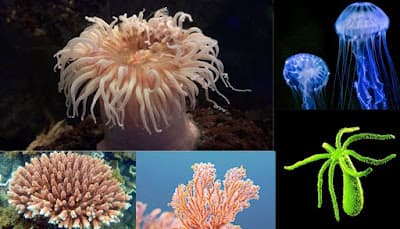
Coelenterata/Cnidaria are diploblastic, tentacled invertebrates with stinging cells, dominated in the fossil record by Anthozoa corals, including index fossils such as Porites (Eocene), Thamnasteria (Triassic–Cretaceous), Cunnolites, and Isastrea.

By Yuri Kemal FatahRead
Feb 8, 2026
1 min read

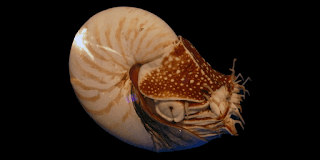
FOSSIL 4: CEPHALOPODA

Cephalopoda are head-footed mollusks with tentacles and internal or external shells whose evolving suture patterns—such as Goniatites (Triassic), Ceratitida (Jurassic), and Ammonoidea (Cretaceous)—serve as important fossil age indicators.

By Yuri Kemal FatahRead
Feb 8, 2026
1 min read

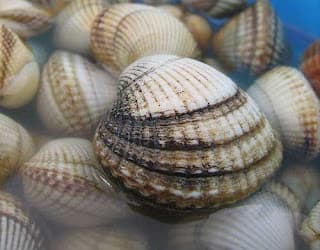
FOSSIL 2: PELECYPODA

Pelecypoda (Bivalvia) are flat-footed, freshwater, equivalved mollusks with bilateral side symmetry, differing from Brachiopoda in shell symmetry, orientation, and beak characteristics.

By Yuri Kemal FatahRead
Feb 8, 2026
3 min read

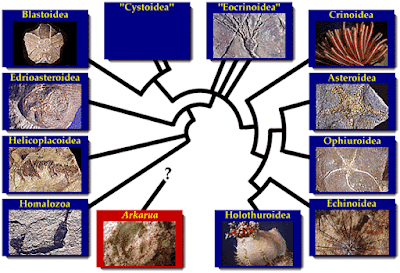
FOSSIL 7: ECHINODERMATA

Echinodermata are spiny, triploblastic marine invertebrates with CaCO₃ endoskeletons, bilateral larvae and pentaradial adults, including groups such as Asteroidea, Echinoidea, and Crinoidea, with key index fossils like Micraster and Clypeaster marking specific geologic ages.

By Yuri Kemal FatahRead
Feb 7, 2026
2 min read

FOSSIL 5: PORIFERA

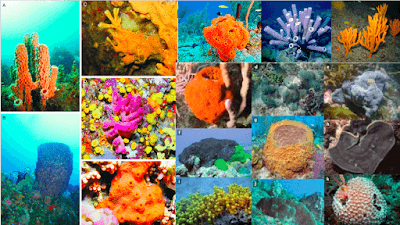
Porifera are pore-bearing, multicellular, diploblastic marine invertebrates with spicule-based skeletons (e.g., Calcarea, Hexactinellidae, Demospongiae), including important index fossils such as Archaeocyatida (Early–Middle Cambrian) and Stromatoporoidea (Ordovician–Quaternary).

By Yuri Kemal FatahRead
Feb 7, 2026
2 min read

FOSSIL 3: GASTROPODA

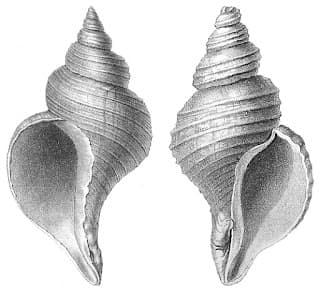
Gastropoda are soft-bodied mollusks with usually trochospiral (3D) dextral or sinistral shells, while Cephalopoda typically exhibit planispiral (2D) coiling; gastropods serve as important index fossils (e.g., Vicarya verneulli vicassa and Turricula flammea atjehensis) and form the basis of Oostingh’s Neogene biozonation in Java.

By Yuri Kemal FatahRead
Feb 7, 2026
3 min read

FOSSIL 1: BRACHIOPODA

In paleontology labs, body fossils like Brachiopoda are drawn in 3D with scaled measurements and anatomical views (dorsal, ventral, anterior, posterior), highlighting their marine, bilaterally symmetrical shells, pedicle structure, and major groups (Inarticulata and Articulata), including index fossils such as Spirifer and Terebratula.

By Yuri Kemal FatahRead
Feb 7, 2026
3 min read

FOSSILIZATION PROCESS

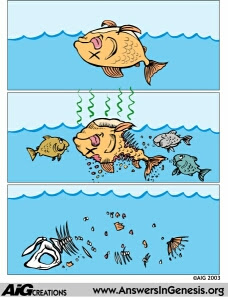
Fossils cannot form in igneous rocks (due to extreme heat) or survive in metamorphic rocks (due to heat and pressure), but are preserved in sedimentary rocks, where gradual burial by sediments under relatively low temperatures allows fossilization and later tectonic exposure.

By Yuri Kemal FatahRead
Feb 7, 2026
6 min read

FOSSILS FOSSILIZATION AND ROCKS

Fossils are generally preserved in sedimentary rocks because deposition and low-temperature burial allow fossilization, whereas igneous rocks destroy remains through high-temperature magma and metamorphic rocks alter or obliterate fossils due to heat and pressure.

By Yuri Kemal FatahRead
Jan 3, 2026
2 min read

PALEONTOLOGY

Paleontology is the science of ancient life preserved as fossils—classified into micro/macro studies or zoo/botany branches—and aims to determine age, environment, climate, and the history of life evolution.

By Yuri Kemal FatahRead

Never Miss an Article

Get weekly updates on new articles, tools, and engineering insights delivered to your inbox.

Subscribe to Newsletter